Independent software studio

Fineware

Custom software for work that does not fit off the shelf.

We design and build focused websites, internal tools, workflow systems, data-rich applications, and the platforms behind them.

  • Product strategy
  • Experience design
  • Software engineering
  • Operations

The studio

Specific problems deserve specific software.

Fineware works where generic tools stop fitting. We turn complex processes into clear, durable software, from a precise public website to the system behind an entire operation. Product thinking, interface design, engineering, and runtime decisions stay connected from the first sketch through production.

Built around the real workflow The software follows the people, decisions, and constraints of the work instead of forcing them into a template.
Designed as one system Interface, data, integrations, deployment, and operation are considered together rather than handed off in fragments.
Focused enough to last Clear scope, understandable architecture, and deliberate resource use make the result easier to operate and change.

Representative work

Software with a job to do.

These capability studies show the kinds of systems we shape: operational tools that clarify action, data interfaces that make complexity usable, and digital experiences that communicate with purpose. They are illustrative, privacy-safe demonstrations rather than client case studies.

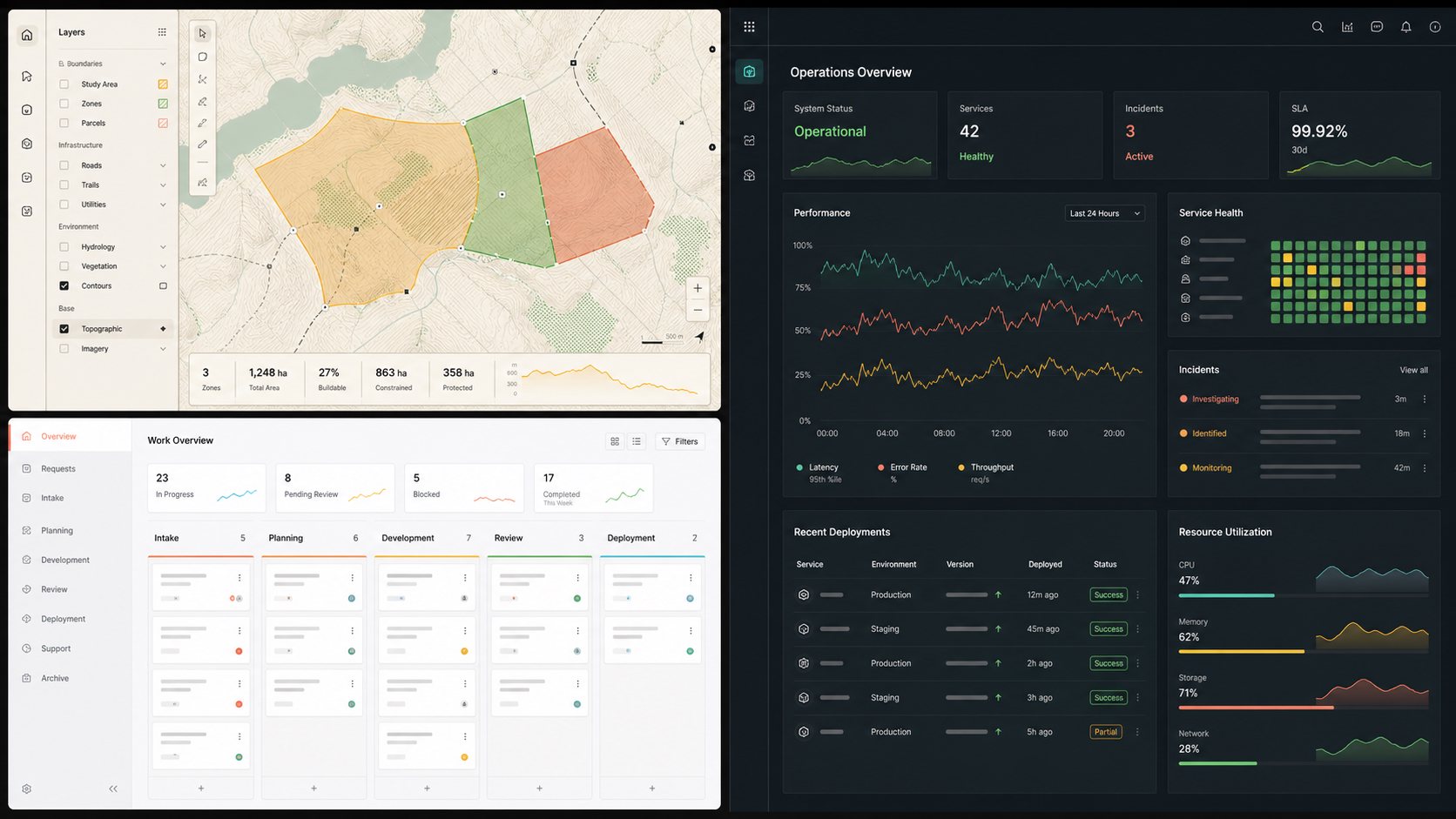
Dark operations workspace with system health, activity charts, and a structured work queue
01

Capability study

Operational software

Dashboards, portals, queues, and line-of-business systems that make status, ownership, exceptions, and next actions clear.

  • Role-aware workspaces
  • Queues and approvals
  • Reporting and service health
  • Purpose-built controls
Composite of mapping, workflow, and operations software interfaces
02

Capability study

Data-rich tools

Search, mapping, planning, reporting, and decision interfaces that keep dense information legible and the important action close at hand.

  • Geospatial planning
  • Structured search and filters
  • Decision support
  • Complex state made visible

Websites and digital presence

A website can be simple without being generic.

We build focused marketing, product, portal, and editorial experiences with strong hierarchy, distinct visual character, accessible foundations, and a codebase that stays understandable after launch.

  • Positioning and content structure
  • Responsive interface design
  • Accessible front-end engineering
  • Performance-conscious delivery
  • Content and product integrations
  • Deployment and operation
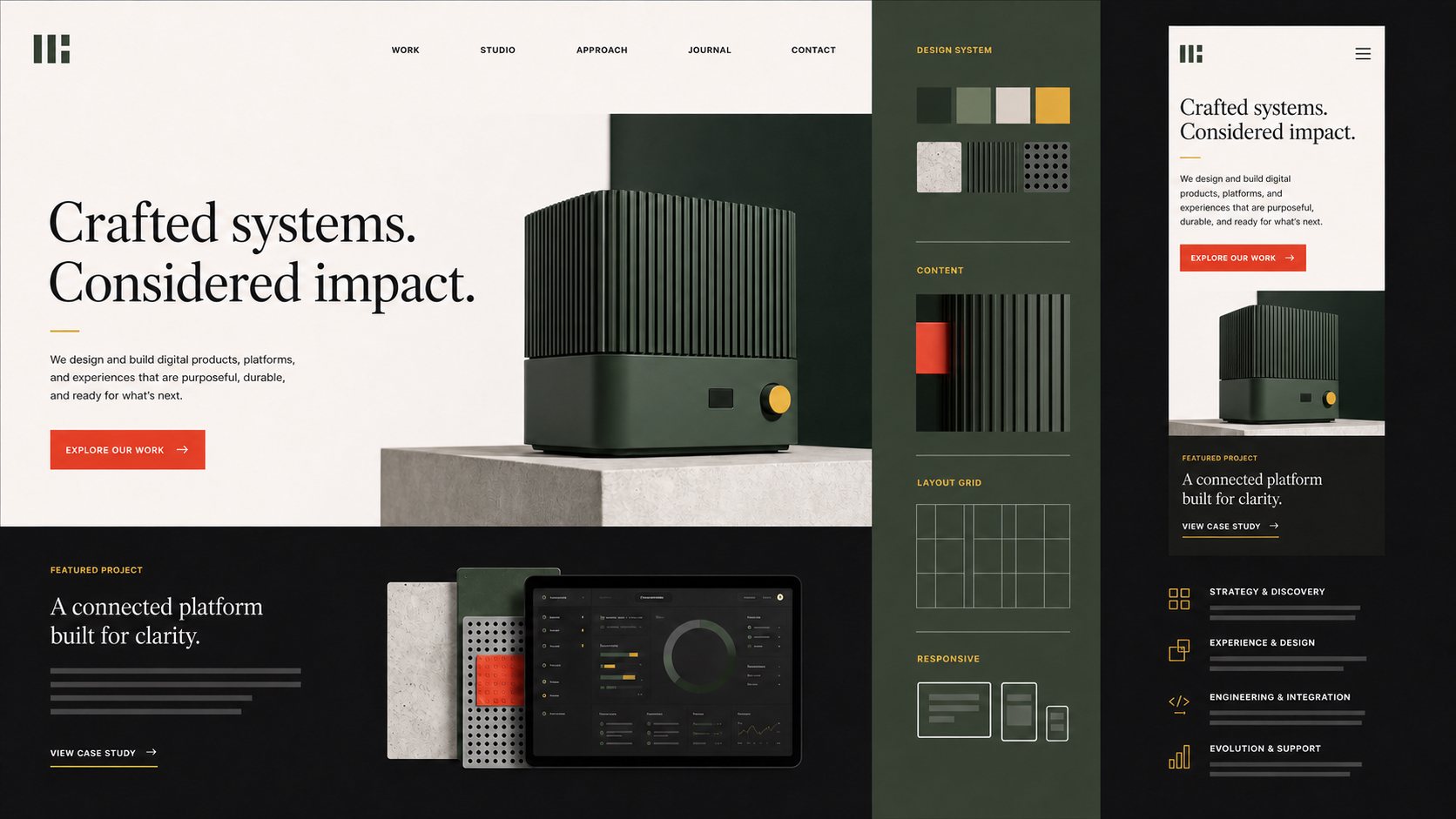
Editorial website system shown across desktop and mobile layouts with coordinated design-system details

Capabilities

From the front door to the engine room.

Some engagements need one sharp interface. Others need a connected product, workflow, and operating platform. Fineware can work across that range without losing sight of the job the software exists to do.

01

Websites and digital experiences

Marketing sites, product experiences, service portals, and editorial platforms that make the value clear and the next action obvious.

02

Custom applications

Purpose-built products, internal tools, dashboards, customer workspaces, and line-of-business systems shaped around a particular operation.

03

Workflow and integration

Connected systems that reduce repetitive handoffs, preserve context, surface exceptions, and keep state visible across the work.

04

Data interfaces

Search, reporting, maps, planning tools, and decision surfaces that turn large or complicated records into useful action.

05

Modernization

Stabilize, simplify, integrate, or replace software that has become slow to change, expensive to operate, or difficult to understand.

06

Platform engineering

Deployment and runtime architecture designed for predictable operation, bounded resources, observability, recovery, and responsible growth.

Fineware Edge

We build the product and the platform it needs.

Fineware Edge is our on-demand application platform. Dormant applications run no application or database process; a small shared control plane verifies demand, starts the required workload, and returns it to rest when the work is done.

01 Demand

An explicitly configured project receives a real request.

02 Verify

The shared gateway checks the host and wake proof before starting work.

03 Start

Capacity is checked and the existing application image starts on demand.

04 Serve

The request reaches the isolated workload with bounded runtime resources.

05 Rest

After the idle window, the application and worker return to zero.

Zero app processes at rest

A registered dormant project is metadata, not another permanent service, timer, proxy, or database process.

One shared control path

Routing, verification, lifecycle control, quotas, and capacity admission are designed as reusable platform concerns.

Trusted-code boundary

The platform is deliberately scoped for trusted projects and does not pretend shared-kernel hosting is hostile-tenant isolation.

Approach

A clear path from problem to working software.

The process is structured enough to make progress visible and flexible enough to follow what the work reveals. Risk is addressed early, scope stays explicit, and production is part of the design conversation from the beginning.

01

Frame

Map users, decisions, data, constraints, current workarounds, and the definition of useful.

02

Prototype

Make the workflow tangible and test the riskiest assumptions before committing to the full build.

03

Design

Shape interaction, interface, information, and system behavior as one connected product problem.

04

Build

Ship a focused production release with bounded scope, visible progress, and deliberate technical choices.

05

Launch and improve

Test, deploy, document, operate, and use real behavior to guide the next useful iteration.

Engineering principles

The quiet parts matter.

The interface gets seen. The decisions beneath it determine whether the product remains useful. These are priorities we bring into the work, not badges added at the end.

Clarity

Language, hierarchy, state, and action should make the system easier to understand than the process it replaces.

Performance

Fast paths, bounded work, and deliberate loading behavior protect attention and operational headroom.

Accessibility

Semantic structure, keyboard use, legible contrast, and responsive behavior belong in the foundation.

Privacy

Collect less, expose less, keep boundaries explicit, and avoid third-party dependencies that do not earn their place.

Maintainability

Understandable code, documented operation, reversible changes, and restrained abstractions keep future work possible.

Responsible operation

Resource limits, observability, recovery paths, and scale-to-zero behavior are product decisions as much as infrastructure choices.

Independent by design

Close to the problem. Accountable for the whole result.

Fineware is an independent software studio focused on thoughtful, custom-built digital work. We stay close to the problem from the first sketch through production, bringing product thinking, interface design, software engineering, and operations into one continuous process. The goal is not more software. It is the right software, shaped carefully enough to become part of the work.

Common questions

What working with Fineware can cover.

What can Fineware build?

Focused websites, internal systems, customer portals, workflow tools, dashboards, data-rich interfaces, integrations, and purpose-built digital products. The useful starting point is the problem and the work around it, not a predetermined technology.

Can a project start small?

Yes. A focused framing or prototype phase can make the workflow tangible, test the riskiest assumptions, and define a useful first production release before a larger commitment.

Can Fineware work with existing software?

Yes. Existing systems can be stabilized, simplified, integrated, extended, or replaced after their real constraints and dependencies are understood.

Do design and engineering stay together?

They do. Workflow, interface, data, integrations, deployment, and operation are treated as parts of the same product problem, so decisions can be evaluated in context.

What happens after launch?

Operations, monitoring, documentation, handoff, and continued iteration are scoped explicitly for the project. A launch is a production milestone, not the point where responsibility disappears.
Start with the hard part

Bring the problem that does not fit in a template.

Whether the answer is a sharp new website or software built around a difficult workflow, the first useful step is making the problem, constraints, and desired change clear.